Key Takeaways
- Prevents Bone Resorption: Dental implants stimulate the jawbone, halting the natural bone deterioration that begins immediately following tooth loss.
- Preserves Adjacent Enamel: Unlike traditional bridges, dental implants do not require altering or reshaping neighboring healthy teeth.
- Controls Total Treatment Costs: Timely replacement avoids complex secondary procedures, such as bone grafting, sinus lifts, or orthodontic realignments.
- Structured Treatment Timeline: Procedure spans multiple planned visits over 3 to 6 months to ensure complete osseointegration and long-term stability.
- Restores Full Function: Titanium posts mirror natural root support, providing durable stability for long-term oral health and chewing capacity.
While a missing tooth may initially seem like a minor issue, delaying treatment triggers a ripple effect of oral health complications beneath the gumline, including rapid alveolar bone loss, shifting neighboring teeth, and altered bite mechanics. Surface solutions like dentures and bridges restore appearance, but choosing dental implants in Sarnia addresses the root cause by replacing both the tooth root and the crown to halt structural decay. Seeking early evaluation prevents simple tooth loss from escalating into a complex, multi-phase surgical procedure, ensuring long-term oral stability and function.
Why are Dental Implants in Sarnia the Top Choice for a Missing Tooth?
Direct Answer: Dental implants in Sarnia serve as a primary solution for missing teeth because titanium posts integrate directly with the jawbone to replace natural tooth roots. This integration preserves alveolar bone structure and restores normal chewing function without requiring modifications to adjacent healthy teeth.
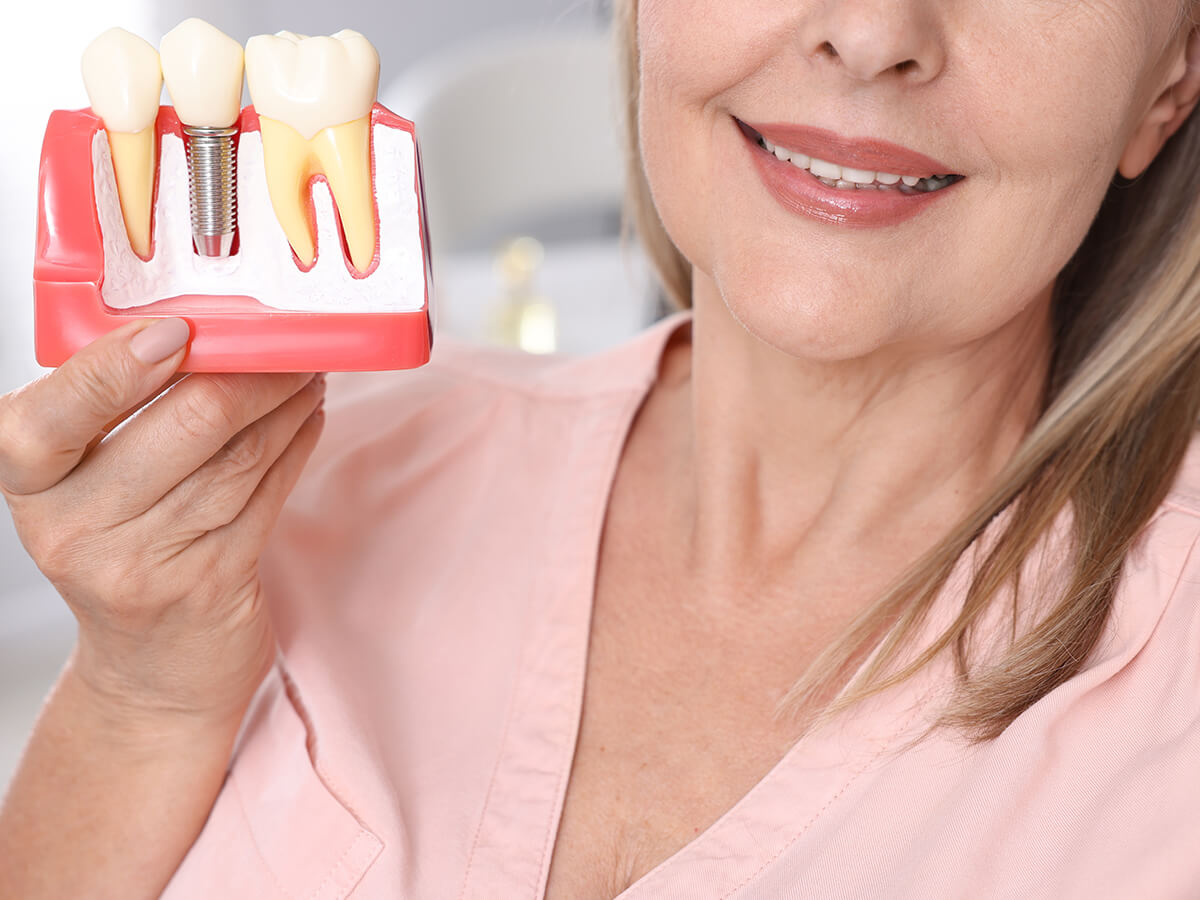
The biological mechanism driving implant success is osseointegration, a process where living bone cells attach directly to the biocompatible titanium surface. Natural tooth roots transmit mechanical forces into the jawbone during chewing, signaling the body to maintain bone density. When a root is missing, that signal ceases. An implant post restores this internal mechanical stimulus, preserving local jawbone structure.
| Component | Physical Position | Primary Function |
|---|---|---|
| Restorative Crown | Visible top section | Custom porcelain or zirconia tooth restoring aesthetic & mastication |
| Abutment | Middle connector | Collar piece securing the crown to the underlying post |
| Titanium Post | Embedded in jawbone | Biocompatible artificial root restoring mechanical stimulation |
Alternative options, such as tooth-supported dental bridges, require reducing neighboring healthy teeth to serve as anchors. Removable partial dentures rest on top of gum tissue, providing surface restoration without stopping underlying bone loss. Dental implants function independently, maintaining tooth structure across the entire arch while restoring up to 90% of natural chewing capacity.
What Happens to Your Jawbone When You Wait to Replace a Tooth?
Direct Answer: Delaying tooth replacement causes progressive alveolar bone resorption due to the absence of direct mechanical stimulation during mastication.
During the first twelve months following extraction, up to 25% of the surrounding bone width is reabsorbed by the body. As bone volume shrinks, the structural foundation necessary to anchor an implant diminishes. This reduction occurs silently without immediate pain, but permanently alters jaw contours.
In addition to bone loss, adjacent teeth gradually shift or tilt into the empty space through a process known as mesial drift. Concurrently, the opposing tooth in the opposite arch can drift downward or upward into the gap (super-eruption). These shifts alter natural bite alignment, increase the risk of temporomandibular joint (TMJ) discomfort, and create hard-to-clean spaces where bacteria collect.
Progressive Timeline of Untreated Tooth Loss
- Phase 1 (Immediate – 3 Months): Masticatory stimulation stops; localized bone resorption begins along the alveolar ridge.
- Phase 2 (3 – 12 Months): Up to 25% of local alveolar bone width is reabsorbed; adjacent teeth begin mesial drift.
- Phase 3 (12+ Months): Severe bone height loss occurs; opposing teeth super-erupt into the void; facial height decreases.
How Does Delaying Tooth Replacement Increase Your Treatment Costs?
Direct Answer: Delaying treatment increases total medical costs because loss of bone mass often necessitates supplementary procedures such as bone grafting or sinus lifts prior to implant placement. Addressing secondary complications like orthodontic drift or decay on misaligned teeth adds further restorative expenses to the final treatment plan.
| Procedure Element | Immediate / Early Replacement | Delayed Replacement (Post Bone Loss) |
|---|---|---|
| Primary Placement & Crown | Included in baseline plan | Included in baseline plan |
| Supplemental Bone Grafting | Typically Not Required | Frequently Required ($500 – $3,000) |
| Sinus Lift (Upper Arch) | Not Required | Required for upper molars ($1,500 – $3,000) |
| Orthodontic Realignment | Not Required | Needed if adjacent teeth drifted |
| Estimated Clinical Timeline | 3 to 6 Months | 6 to 12+ Months |
When a patient seeks missing tooth replacement immediately after extraction, existing bone volume is typically sufficient to support a titanium post without additional interventions. Waiting years allows the jawbone to thin significantly, requiring a bone graft to rebuild the ridge before an implant can be anchored.
In the upper posterior jaw, prolonged tooth loss allows the maxillary sinus cavity to expand downward. Correcting this requires a sinus lift procedure to raise the sinus floor and pack graft material beneath it, adding clinical time and financial investment to the treatment.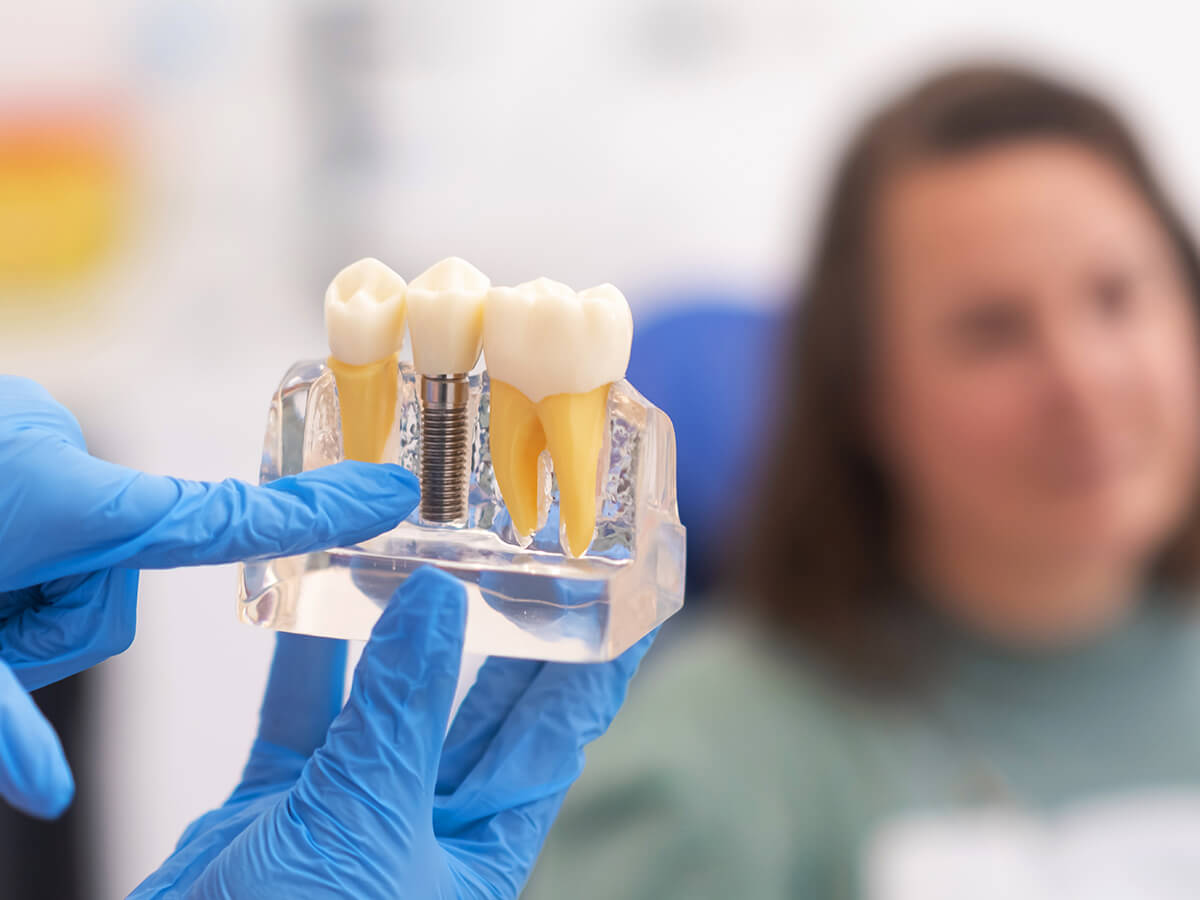
Who is a Candidate for Dental Implants?
Direct Answer: Candidates for dental implants in Sarnia include non-smoking adults with completed jaw growth, adequate jawbone density, and healthy periodontal tissues. Individuals with managed systemic health conditions like controlled diabetes can qualify after a clinical evaluation of their healing capacity.
Dental implant candidacy depends primarily on skeletal maturity, sufficient jawbone volume, and optimal microvascular healing capacity. Since natural jawbones shift during adolescence, candidates must have completed facial growth (typically ages 18 to 21) to prevent post-submergence, though there is no upper age limit for healthy seniors.
Structurally, the jaw requires at least 6.0 mm of ridge width and 10.0 mm of vertical bone height to lock the titanium fixture in place, though patients with lower bone density can still qualify using preparatory bone grafts. Systemically, active periodontal disease must be treated to prevent early infection, and conditions like diabetes must be well-controlled (HbA1c below 7.5%–8.0%) to ensure healthy blood flow and osteoblast activity during osseointegration.
Core Qualification Criteria
- Jawbone Availability: Sufficient height and width of the alveolar ridge to enclose the titanium fixture.
- Periodontal Health: Absence of active gum disease or untreated periodontitis.
- Systemic Health Status: Controlled systemic conditions (e.g., managed diabetes); unmanaged conditions or active auto-immune treatments require medical clearance.
- Tobacco Usage: Non-smoking status is preferred; smoking reduces localized blood circulation, increasing risk of early implant failure.
What is the Step-by-Step Process for Getting Dental Implants?
The treatment process involves initial diagnostic 3D imaging, surgical placement of the titanium post into the jawbone, a healing period of 3 to 6 months for osseointegration, and final attachment of a custom crown. Each step requires precise clinical monitoring to verify tissue integration and structural stability.
- Initial Consultation & 3D Imaging (Digital Mapping and Diagnostic Planning)
Comprehensive clinical assessment using 3D Cone Beam Computed Tomography (CBCT) to evaluate bone structure, map nerve pathways, and select precise implant dimensions.
- Implant Post Surgery (Surgical insertion into the jawbone)
The biocompatible titanium fixture is surgically inserted into the jawbone under local anesthesia or comfortable dental sedation.
- Healing & Bone Integration Phase (3 to 6 Months of Osseointegration)
A mandatory rest period where living bone tissue grows around the titanium post, creating a permanent structural bond capable of supporting a functional crown.
- Abutment & Custom Crown Placement (Final prosthetic attachment)
An abutment connector is attached to the integrated post, followed by securing a custom-milled porcelain or zirconia crown matched to adjacent teeth.
Why Cumulative Care and Multiple Sessions Are Necessary
A single appointment is insufficient for full dental implant placement because bone tissue requires time to respond to surgical placement. Forcing immediate heavy loading onto an unintegrated implant can disrupt microscopic tissue attachment, leading to mobility and fixture loss. Stagewise appointments ensure every clinical benchmark—tissue healing, osseointegration, and proper bite calibration—is met sequentially.
How Much Do Dental Implants Cost in Sarnia?
| Cost Component | Typical Ontario Cost Range | Purpose / Notes |
|---|---|---|
| Diagnostic 3D Imaging (CBCT) | $200 – $500 | Pre-surgical anatomical mapping |
| Surgical Implant Placement | $1,500 – $3,000 | Titanium post insertion |
| Abutment & Lab Component | $300 – $1,000 | Structural connector |
| Restorative Implant Crown | $1,000 – $2,500 | Natural-looking porcelain/zirconia crown |
| Bone Grafting (If Required) | $500 – $3,000 | Ridge augmentation for bone loss |
Dental fee structures reflect guidelines published in the Ontario Dental Association (ODA) Suggested Fee Guide. Since the ODA guide serves as a baseline reference rather than a mandatory price cap, individual clinical fees depend on case complexity, laboratory material costs, and supplemental procedures.
Private dental insurance plans vary regarding coverage for major restorative procedures. While some employer policies cover portions of the crown or diagnostic imaging, third-party financing plans allow patients to spread remaining balances into manageable monthly payments.
Book a Dental Implant Assessment at Lambton Family Dental
Replacing a missing tooth early preserves your jawbone, protects neighboring teeth, and helps avoid complex corrective surgeries in the future.
At Lambton Family Dental, our team provides comprehensive evaluations and personalized implant care tailored to your unique oral health needs. Call our office today at 519-344-5747 to schedule your consultation for dental implants in Sarnia.
Frequently Asked Questions
1. Can a dental implant be placed on the same day a tooth is extracted?
Immediate implant placement is possible when the surrounding bone is healthy, uninfected, and structurally dense enough to stabilize the post right after extraction. If severe infection or significant bone loss is present, the site must heal for two to four months before placement.
2. What is the failure rate of dental implants, and what causes it?
Dental implants maintain an overall clinical success rate exceeding 95%. Early failures are typically linked to incomplete osseointegration, medical conditions that slow bone healing, or surgical site infection. Late failures are usually caused by peri-implantitis or excessive biting forces from teeth grinding.
3. Is the dental implant surgery procedure painful?
Placement surgery is performed under local anesthesia, ensuring the surgical area remains numb throughout treatment. Post-operative discomfort is generally mild to moderate and manageable with standard over-the-counter pain relievers or prescribed medication for two to three days following surgery.
4. What is the difference between a titanium implant and a zirconia implant?
Titanium implants are the industry standard due to decades of clinical research demonstrating high strength and biocompatibility. Zirconia implants are non-metallic ceramic alternatives often selected by patients with metal sensitivities or specific cosmetic preferences regarding thin gum tissue.